New vision technology delivers cut-to-carcase traceability
Before a boning room buys into cut-to-carcase vision tracking, here's what it actually costs, where it breaks, and who it leaves behind.
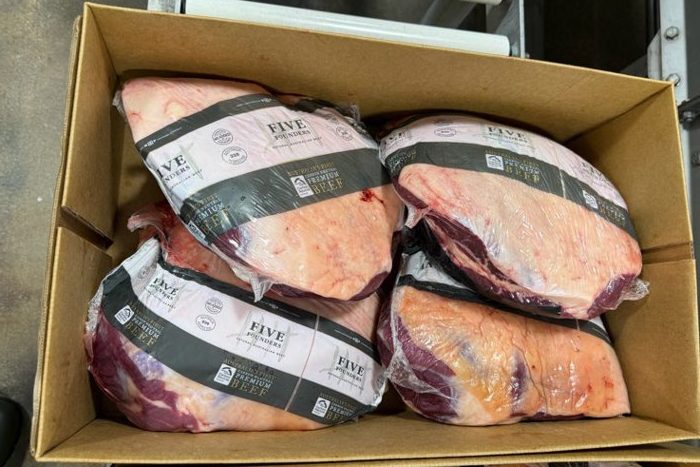
Before you spend a cent on this technology, you need to know what “100 per cent accuracy” is actually measuring, because it almost certainly isn’t measuring what you think it is.
Cut-to-carcase traceability sounds simple on paper. A camera looks at a carcase, remembers its unique pattern of fat, muscle and marbling the way a fingerprint scanner remembers a thumb, and then follows that signature all the way through the boning room until it lands in a carton. No ear tag, no barcode, no RFID chip. Just vision doing the job that paperwork used to do badly.
That’s the pitch. The question you should be asking is what happens on the floor of your own plant, at your own line speed, with your own mix of carcases, buyers and cuts. That’s where the gap between a validated trial and a working system shows up.
What ‘100 per cent’ actually means
Any claim of perfect accuracy needs three things before it means anything to you: how many carcases were tracked, over how long, and under what conditions. A trial run across a controlled batch, in good lighting, with a single product line, tells you the concept works. It does not tell you the system will hold up across a full day’s throughput of mixed breeds, mixed fat scores, and mixed cut specifications.
Carcases get trimmed further down the line. They get frozen. They get vacuum packed and re-packed into retail-ready cartons weeks later. Every one of those steps changes the visual signal the camera first captured. A system that nails identification at the point of splitting doesn’t automatically nail it after a cut has been trimmed twice more and frozen solid. Trim changes shape, fat colour shifts with freezing, and packaging can obscure the very features the camera relied on.
So when you hear “100 per cent accuracy in commercial trials,” the honest response is: accurate at what stage, on what cut, measured against what benchmark. Vendors rarely volunteer that detail unprompted. You should ask for it before you sign anything.
The cost sits in the boning room, not the camera
The camera itself is the cheap part. The expensive part is making it talk to everything else.
A boning room is not a clean, single-file production line waiting for a sensor to be bolted on. It’s a sequence of cutters, conveyors, scales and labelling stations, each running its own software, each built up over years, often from different suppliers. Cut-to-carcase vision only delivers value if its identification data can be matched, in real time, to whatever system is already weighing and labelling product. That means integration work, middleware, and almost certainly some custom engineering specific to your plant’s layout.
Then there’s line speed. Large export processors move carcases through boning at a pace that leaves very little time for a camera system to capture, process and confirm identity before the next piece of meat is already past the point of no return. If the vision system can’t keep up, you either slow the line, which costs money every single shift, or you accept gaps in the traceability chain at exactly the volume you installed the system to handle.
Quick tip: before any serious conversation with a vendor, ask them to demonstrate the system at your actual historical line speed, with your actual mix of carcase types, not a reference speed from someone else’s plant.
Splits, co-mingling and the limits of a single signature
Here’s where the clean story falls apart fastest. Carcases don’t always travel as one unit toward one buyer. Export plants routinely split a single carcase so that different primals go to different markets with different specifications. One side might head to a premium domestic retail order, another cut from the same animal might go into a bulk export carton.
A vision system built around tracking one carcase’s signature has to somehow carry that identity across multiple diverging paths, through multiple final cartons, for multiple customers, without losing the thread. That’s a materially harder problem than tracking one carcase end to end in a straight line.
It gets harder again with co-mingling. A lot of carton-ready product isn’t a single sub-primal from a single carcase. It’s several pieces from several animals, trimmed to the same spec and packed together because that’s how the order was written. At that point, “cut-to-carcase” traceability has to become “cuts-to-carcases,” plural, inside one carton. Whether the system can hold multiple distinct signatures per carton, and report them individually rather than as an averaged or dominant match, is a question worth asking directly rather than assuming the marketing material covers it.
Who this actually suits
Large export processors running high volumes through modern boning rooms are the obvious fit. They have the throughput to justify the integration cost, the existing digital infrastructure to plug a vision layer into, and export customers increasingly asking for stronger provenance guarantees. For that tier of operation, the capital cost is a rounding error against annual turnover, and the traceability upgrade can be sold as a market access tool.
Small and mid-sized abattoirs are a different proposition entirely. Lower throughput means the cost per carcase of installing and maintaining a vision system is much higher, because there are fewer units over which to spread the capital and integration cost. If your boning room already runs on manual knife work and simple scales, bolting on a camera-based identification layer is not a small upgrade, it’s closer to a redesign.
There’s also a group of processors who have already solved this problem a different way. Plants using DNA-based traceability or RFID tagging have already built workflows, trained staff and absorbed costs around their existing system. Replacing that with vision technology only makes sense if it’s clearly better and clearly cheaper, not just newer. In a lot of cases it will be neither, at least for several years.
Where the data goes
One question that rarely gets asked loudly enough: who owns the trace once it’s captured. The vision benefits list always mentions producer feedback as an upside, the idea being that a grower finally gets to see how their animal performed through boning and into carton. But capturing that data and actually routing it back to the producer are two different design decisions.
Nothing about the technology itself guarantees a feedback loop. A processor can install cut-to-carcase vision purely for internal yield analysis and quality control, keep the data in-house, and never share a line of it with the people who supplied the animals. If producer feedback matters to you, that has to be negotiated into the contract, not assumed as a feature.
The takeaway
Cut-to-carcase vision traceability is a genuinely useful idea, but it is not a plug-and-play upgrade, and the accuracy claims attached to it describe trial conditions, not your conditions. Before you adopt it, find out what happens to its accuracy after trimming, freezing and re-packing, confirm it can handle split carcases and co-mingled cartons without losing individual identity, cost the boning room integration separately from the camera hardware, and decide upfront whether producers get to see any of the data it generates.

Shows & Events Desk
Reporting from the show ring — results, schedules and tips to get your Wiltshire Horns show-ready.