Central west NSW property Ashford Heath sells to recycler
A waste-recycling company just bought a 2,538-hectare sheep and cropping farm — and the reason has nothing to do with raising lambs.
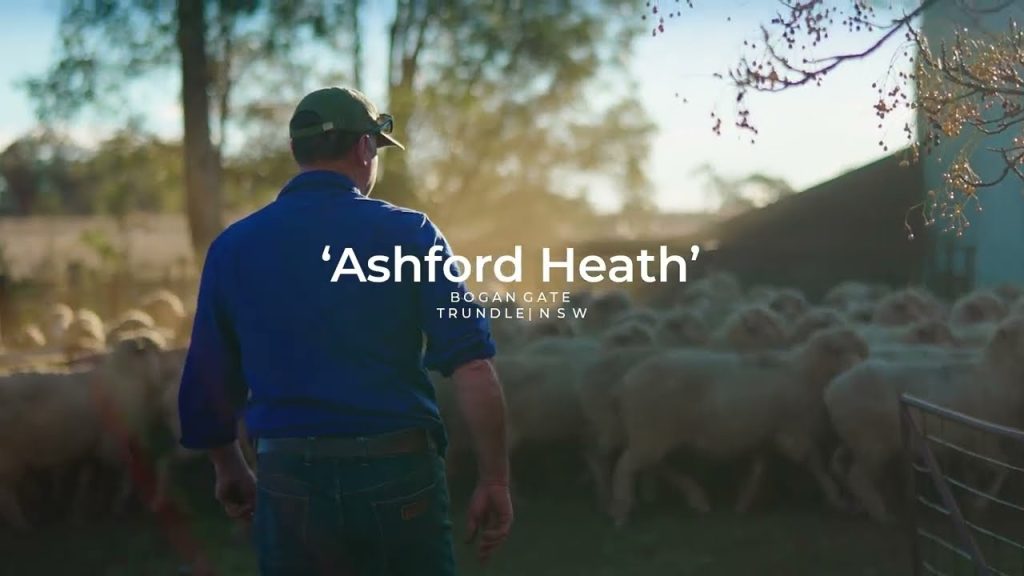
The first time anyone in Bogan Gate heard that Ashford Heath had changed hands, the question going around the pub wasn’t how much it sold for. It was simpler and stranger than that: why would a company that turns garden clippings and food scraps into mulch and compost want to own a sheep and cropping property the size of a small suburb? Recyclers buy sheds, transfer stations and industrial blocks near town. They don’t usually buy grazing country two and a half thousand hectares deep, with merinos on it and a header still parked in the shed.
Bettergrow’s purchase of Ashford Heath is not a farming investment at all — it is a bet that farmland itself, its soil, its water licence and its sheer scale, is about to become critical infrastructure for the organics recycling business.
A Pub Conversation Turns Into a Bigger Question
It is easy to treat a rural property sale as a number — a sale price, a rate per hectare, a name on a title. That is the version of this story that travels fastest. But the more interesting version sits underneath it: what does a company whose core business is processing organic waste actually want with a working sheep and cropping operation in the central west? The answer says less about Ashford Heath and more about where the organics recycling industry thinks it is heading over the next decade.
What a Recycler Actually Does With a Farm
Organic waste recycling does not end at the gate of a processing facility. Green waste, food waste and biosolids get shredded, blended and composted, but eventually that compost has to go somewhere. In many cases it is sold back to agriculture as a soil conditioner. In other cases, particularly with material that is harder to place commercially or that comes with regulatory conditions attached, the simplest and cheapest outlet is land the recycler controls itself. Owning broadacre country gives a processor somewhere to apply compost at scale, trial blends on live cropping and pasture systems, and demonstrate — to regulators, to councils, to future customers — that the end product actually improves soil rather than just disposing of a problem.
There is also the water. A property with established irrigation entitlements or reliable groundwater access is valuable to a recycler for the same reason it is valuable to any grower: water underwrites what you can grow, and what you can grow underwrites what organic inputs the land can absorb without running off into a creek. For a company managing feedstock volumes, having its own land bank with water rights attached is a hedge against the two things that most limit composting operations — somewhere to put the finished product, and the licences needed to spread it safely.
Why Agricultural Land Beats an Industrial Block
Industrial land near Parkes would make sense if Bettergrow simply wanted a bigger shed. But a processing facility and a land-application site solve two different problems. Industrial-zoned land is built for trucks, concrete pads and odour-controlled sheds; it is not built for broadacre spreading, buffer distances from waterways, or long rotations where compost is incorporated into soil over several growing seasons and then monitored for results. Agricultural land, especially a property of real scale like Ashford Heath, gives room to separate activities, keep the required distances from neighbours and sensitive sites, and still run commercial cropping or grazing on the paddocks not currently receiving compost. In effect, the farm becomes both a research site and a working demonstration paddock for recycled organics, something an industrial block simply cannot offer.
A paddock that grows wheat and lambs can just as easily be read, by a recycler, as a parcel of soil, water and space waiting to absorb the byproducts of someone else’s waste stream — and that dual identity is exactly what makes farmland attractive to a company whose real product is somewhere to put organic matter back into the ground.
Brightmark, Parkes, and a Pattern That Isn’t Quite a Pattern
It is tempting to link this purchase directly to the Brightmark plastics investment near Parkes, given the two projects sit in roughly the same corner of the state and both involve waste processing. But they are built around different waste streams entirely — plastics conversion on one side, organic and green waste composting on the other — and there is nothing to suggest Ashford Heath was bought to support Brightmark’s operation specifically. What the two projects do share is a broader signal: the central west is becoming a genuine hub for waste infrastructure investment, drawing processors who need land, transport access and proximity to regional population centres, rather than capital city sites where land is tighter and community resistance to waste facilities tends to be louder. Ashford Heath fits that regional logic on its own terms, without needing to be tied to a neighbouring project to make sense.
The Sheep, the Crops and the People Left Standing in the Paddock
For anyone who has worked on Ashford Heath, the practical question is the most pressing one: what happens now. Properties like this rarely change character overnight. A new owner with a non-farming background typically keeps existing operations running, at least in the short term, either directly or through a share-farming or management arrangement, simply because livestock and crops already in the ground represent value that doesn’t disappear just because the title has changed hands. Staff and contractors who manage the sheep flock and cropping program are often retained in some form, because local knowledge of soil types, paddock history and water infrastructure is exactly what a recycler would need if it intends to trial compost application across the property over time. The more likely path is a gradual shift — grazing and cropping continuing on most of the land while sections are progressively set aside, trialled or converted for organics handling and land application, rather than a sudden switch from farm to facility.
What the Price Signals About Land Values
Central west NSW mixed farming and grazing country has traded across a wide range over recent seasons, with buyers ranging from expanding family operations to corporate agricultural investors to, now, waste and recycling businesses looking for land as infrastructure rather than land as a farming asset in its own right. A price in the vicinity of what Ashford Heath achieved sits comfortably within the kind of figures mixed cropping and grazing country in this district has been commanding, rather than standing out as unusually high or low. What is more telling than the number itself is who was willing to pay it. A recycler bidding competitively for broadacre farmland, rather than leaving that competition entirely to traditional agricultural buyers, suggests land values in districts like Bogan Gate are increasingly being shaped by non-farming industries that see soil, water and space as inputs to their own supply chains, not just as paddocks.
Back at the Pub
So when the next person in Bogan Gate asks why a recycling company bought a sheep station, the honest answer isn’t about mulch trucks replacing the header overnight. It’s that somewhere in a company’s growth plan, a very large, well-watered block of agricultural land stopped looking like someone else’s farm and started looking like exactly the kind of infrastructure an organics business needs to keep expanding — proof, land, and water, all in the one title.

Member Stories
Breeder profiles and member stories from across the Australian Wiltshire Horn community.