MEP slams new CAP proposals as ‘serious disappointment’
Beyond the outrage: how the Irish presidency's compromise text restructures CAP funding and shifts real financial risk onto Irish farmers.
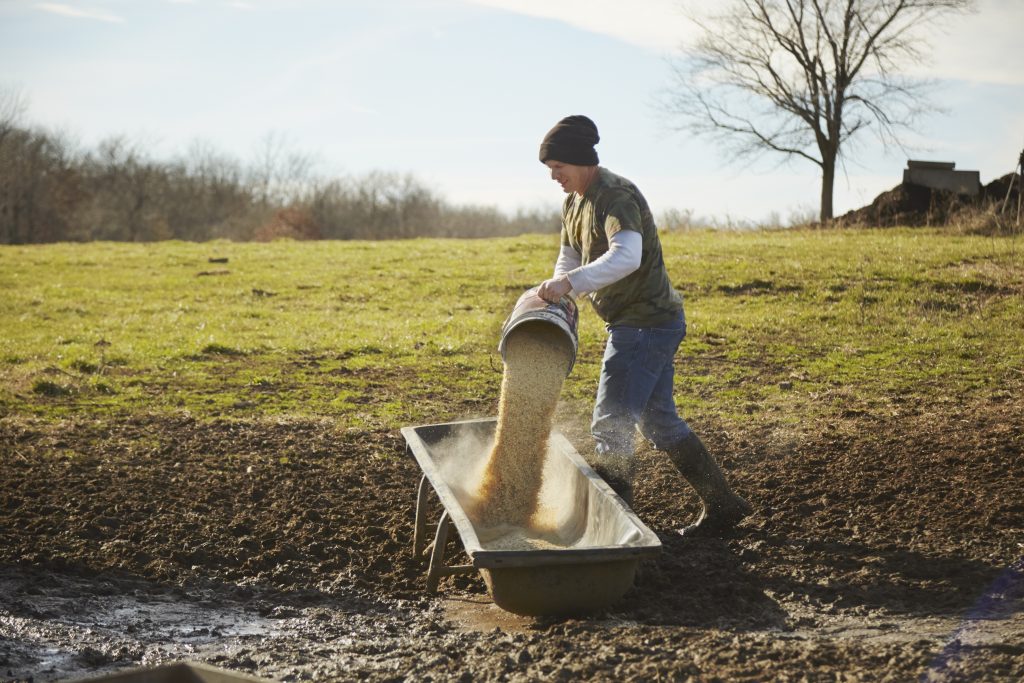
A co-op mart notice board in a midlands town still has last year’s suckler scheme poster pinned up, curling at the corners. Underneath it, someone has stuck a photocopied flyer for a meeting on “CAP 2028 — what’s left of it.” That small act, swapping one piece of paper for another, says more about where Irish farming stands than any press statement. The budget number everyone is quoting is only the headline. The real story is in the plumbing underneath it.
What is actually in the Irish presidency’s compromise text?
At its core, the compromise text proposes folding what are currently separate CAP funding streams — direct payments to farmers and rural development money — into a single, merged national fund that each member state manages largely on its own terms. Under the current system, money for direct income support and money for things like agri-environment schemes, young farmer installation aid, and disadvantaged area payments sit in distinct pots with their own rules. The new structure blends these into one envelope per country, with far fewer binding EU-wide requirements on how it must be split.
Why does merging the funds matter more than the budget cut itself?
Because a merged fund with no mandatory minimum allocations means Brussels no longer guarantees that any fixed share goes to farmer income support versus everything else. In the current system, ringfencing acts like a lock on specific rooms in the house: a minimum percentage must go to young farmers, a minimum to environmental schemes, direct payments are protected as their own category. Remove the locks, and every euro becomes contestable at national budget time, competing against rural broadband, flood defences, or any other priority a finance minister fancies that year. A smaller total budget combined with no ringfencing isn’t just “less money” — it’s less certainty about where whatever money remains will actually land.
What did ringfencing actually guarantee under the current CAP?
Ringfencing guaranteed that a defined slice of CAP funds had to be spent on specific purposes regardless of national political preference. In practical terms, this is why schemes like targeted agri-environment payments, young farmer top-ups, and supports for areas of natural constraint have had reasonably stable funding even when governments changed or budgets tightened elsewhere. Lose that mechanism and those schemes become ordinary line items, subject to the same horse-trading as any other government spending, reviewed and potentially cut at each national budget rather than protected by an EU-level floor.
How do national co-financing rules shift the risk onto Ireland?
Co-financing means Ireland’s own exchequer has to put up a matching share of money to draw down the EU portion, and the compromise text appears to push that national share higher. Under current rural development schemes, Ireland already co-funds a portion of agri-environment and other measures alongside EU money. Raising the required co-financing rate, or extending it to areas that were previously fully EU-funded, means the Irish state carries a bigger slice of the financial risk. If the national budget is tight in a given year — because of a recession, a housing crisis, or any other fiscal pressure — the farm payment that depends on matching exchequer funds becomes vulnerable in a way it never was when Brussels funded it outright. This is the mechanism by which an EU-level budget cut becomes a domestic Irish budget problem, decided in Dublin rather than Brussels.
Which Irish farm sectors are most exposed?
Dairy farmers are relatively insulated because their income is driven primarily by milk price rather than direct payments, while drystock (beef) and tillage farmers, who rely much more heavily on CAP payments as a share of total farm income, are far more exposed. Beef farming in particular has operated for years on tight or negative market margins, with direct payments and schemes like the suckler or beef environmental schemes often the difference between a viable farm and a loss-making one. Tillage farmers face a similar dynamic, compounded by weather risk and input costs, with fewer alternative income supports than livestock sectors have through processor schemes. If ringfenced environmental and disadvantaged-area payments become discretionary national spending, beef and tillage are the sectors with the least cushion to absorb a bad budget year.
Who gains and who loses among different categories of Irish farmers?
Established, larger-scale farmers with diversified income or strong market positions are better placed to absorb a weaker, less-guaranteed CAP than young entrants, new entrants, and very small farms are.
- Young and new entrants lose the most, because installation aid and generational renewal top-ups currently rely on ringfenced minimums that disappear under the merged structure, making that support dependent on annual national budget decisions rather than a guaranteed entitlement.
- Small farms receiving modest annual payments are disproportionately hurt because those payments often represent a larger share of household income relative to farm size, and schemes aimed at smaller or disadvantaged holdings have historically depended on the ringfenced rural development pot rather than market-linked direct payments.
- Established, larger commercial farmers, particularly in dairy, are comparatively better positioned, since their core income is less dependent on the specific schemes most at risk from de-ringfencing.
Quick tip: farmers who rely on scheme payments for a significant share of income should treat this period as a planning signal, not a certainty — it’s worth reviewing which specific payments (basic income support, eco-scheme, ANC, young farmer top-up) make up your current CAP income, because those tied to the old ringfenced categories are the ones to watch most closely as negotiations continue.
What happens to eco-schemes under the new structure?
Eco-schemes lose their guaranteed minimum budget share and become another line competing within the merged national envelope rather than a protected category. Currently, member states must allocate a defined minimum percentage of direct payment funding to eco-schemes, which has driven a lot of recent uptake of environmental actions on Irish farms. Without that mandatory floor, a future Irish government could choose to fund eco-schemes generously, modestly, or barely at all, depending entirely on domestic political priorities in a way the current system does not allow.
A simple before-and-after comparison
| Feature | Current CAP structure | Irish presidency compromise text |
|---|---|---|
| Direct payments vs rural development | Separate funds, separate rules | Merged into one national envelope |
| Minimum spend on young farmers | Ringfenced minimum required | No guaranteed minimum |
| Minimum spend on eco-schemes | Ringfenced minimum required | No guaranteed minimum |
| Who funds rural development measures | Mostly EU, partial national co-financing | Higher required national co-financing share |
When does this actually get decided, and can it still change?
The compromise text is a negotiating position within the Council, not a final law, and it still has to go through negotiations with the European Parliament before anything is settled, meaning the proposal can still be amended, watered down, or strengthened over the coming months. Farm organisations and MEPs retain leverage at several points: through Parliament’s own negotiating position, through pressure from member states that depend heavily on rural development schemes, and through the broader multi-annual budget negotiations that this CAP proposal sits inside. Nothing here is locked in, but the direction of travel — away from guaranteed minimums and toward discretionary national decisions — is the signal farm groups are reacting to now, well before any final vote.
What should Irish farmers actually watch for next?
The two things worth tracking are whether any ringfenced minimums survive the Parliament negotiations in any form, and whether the national co-financing rate that emerges is lower or higher than currently feared. Either of those shifts would materially change how exposed young farmers, small holdings, and beef and tillage producers end up being, regardless of what the final headline budget figure turns out to be.