Big herd, home-grown feed, lower bills: the milk math smaller farms can’t copy
The real question isn't whether home-grown fodder works — it's whether the economics and labour model scale down to smaller or harder farms.
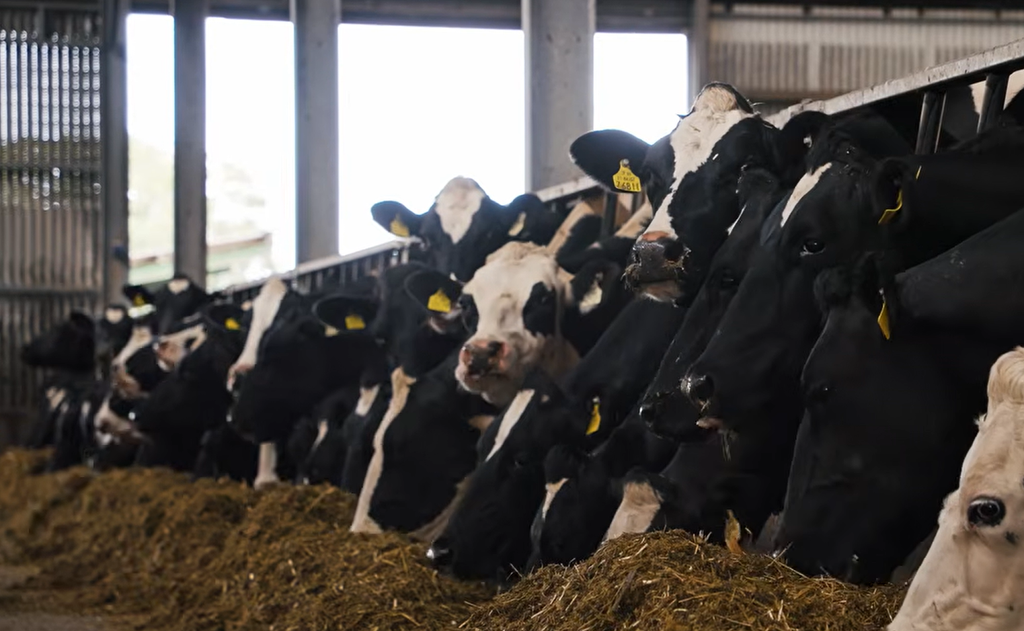
A 370-cow operation and a 60-cow operation can grow the same grass and still end up with completely different balance sheets.
Home-grown fodder systems get presented as a universal win: lower feed bills, better self-sufficiency, happier cows. What rarely gets examined is the arithmetic underneath that claim, and whether the same arithmetic survives contact with a smaller herd, wetter ground, or a summer that doesn’t cooperate. Growing your own silage and grazing swards instead of buying in concentrate feed is well established as a way to reduce purchased inputs — that much is not in dispute. What’s missing from most coverage is the cost-per-litre reality, what fodder quality does to the fat and protein percentages that determine the milk cheque, and whether the labour and machinery investment that makes a large herd’s fodder system hum is remotely achievable at a fraction of the scale.
The takeaway: home-grown fodder genuinely lowers feed cost per litre at scale, but the saving is partly a volume discount on labour and machinery that smaller or lower-yielding farms cannot access the same way.
Myth: Home-grown fodder is simply cheaper milk, full stop
The feed-cost-per-litre figure that gets quoted for grass-and-silage-based systems looks dramatically better than concentrate-heavy diets, and in broad terms it is — grazed grass is consistently the cheapest feed a dairy cow can eat, and well-made silage is the next cheapest, undercutting bought-in meal by a wide margin per unit of energy delivered. But that per-litre figure is a blended number built from fixed costs spread across hundreds of cows: reseeding, slurry storage, silage pits, and a paddock infrastructure that only pays for itself if it’s feeding a large herd across a long grazing season. A farm with a 370-cow herd can spread the cost of a feed wagon, a self-propelled harvester contract, and a well-designed paddock system over a huge volume of milk, which is what actually drives the per-litre number down. The fodder itself isn’t magically cheap — the scale at which it’s produced and used is doing a lot of the work.
Myth: Growing your own feed always beats buying it in
This holds up only when the home-grown fodder is high quality. Poorly fermented silage, or grass cut too late and gone stemmy, delivers a fraction of the energy and protein of good-quality fodder, and a cow eating it will simply eat more tonnage to get the same output — or produce less milk while eating the same amount. At that point the “home-grown is cheaper” calculation collapses, because the farm is paying for diesel, labour, and machinery wear to produce a feed that performs worse than a bag of concentrate would have. The cost-per-litre advantage of home-grown fodder is conditional on forage quality, not a property of growing your own feed as such. A farm that nails silage quality every year earns the saving; a farm that gets it wrong some years is effectively subsidising low-value fodder with diesel and labour it didn’t need to spend.
Myth: Milk is milk, so fodder quality doesn’t matter beyond yield
This is one of the most overlooked pieces of the picture. Farmers are paid not just for litres but for the fat and protein percentages in that milk, and forage quality has a direct effect on both. Grass and silage with good digestibility and energy density support higher milk fat and protein than mature, fibrous, poorly preserved fodder, because the rumen microbes that produce the precursors for milk fat and protein synthesis need a steady, well-balanced supply of fermentable energy and protein to do their job. A herd eating consistently high-quality home-grown fodder can see fat and protein percentages hold up or improve compared with a herd on patchy forage, even at similar milk volumes — and because processors pay on a constituents basis, that difference shows up directly in the milk cheque, not just in the feed bill. This is arguably a bigger lever than the raw feed-cost saving, and it’s the part of the story that rarely gets discussed outside farm advisory circles.
Myth: Relying on home-grown fodder is a safe, low-risk strategy
A system built around home-grown fodder is also a system built around weather. A farm that grows most of its own winter feed is betting that the growing season delivers enough grass to build adequate silage reserves, and a drought, a washout summer, or a late spring can blow a hole in that plan fast. Farms with a large land base and a diversity of ground types can often absorb a bad patch on one block by grazing or cutting elsewhere, and they typically have the scale to justify holding a buffer of surplus silage from a good year forward into a poor one. A smaller operation, or one farming on land that’s naturally slower to recover moisture or more exposed to drought, has far less room to carry that kind of reserve, and a single bad season can force an expensive, unplanned switch to bought-in feed at exactly the time concentrate prices tend to be highest. Home-grown fodder reduces one kind of risk — price exposure to the feed market — while increasing exposure to a different one: weather and yield variability that a smaller farm is less able to buffer.
Myth: This system works the same way regardless of herd size
The labour and machinery trade-off is the clearest reason this doesn’t scale down neatly. Running a rotational grazing platform and a silage programme across a large herd justifies dedicated labour, purpose-built paddock infrastructure, and either owned machinery used intensively or contractor work bought at a competitive rate because of the volume involved. A much smaller herd faces the same fixed workload — fencing, reseeding, moving stock, monitoring grass covers, managing the pit — but spreads it over far fewer cows and far less milk, so the labour cost per litre is structurally higher even if the farmer works just as hard or harder. Contractor rates for mowing, baling, or pit-filling are frequently less favourable for small jobs than for large ones, since contractors price in setup and travel time regardless of the area covered. None of this means a smaller or less-favoured-land farm can’t grow good fodder — many do, and benefit from it. It means the specific cost-per-litre and labour-payback outcome associated with a very large, well-resourced operation is not a template that transfers directly; the same system, run at a fifth of the scale on heavier or more exposed ground, usually returns a smaller margin and carries more risk per cow, even when every other decision is made correctly.
Myth: If the system works on one farm, it proves the economics
A single farm’s results show that the system can work under its specific combination of land quality, scale, management skill, and weather in a given year — not that the same inputs will produce the same outputs everywhere. The honest version of this story is that home-grown fodder lowers feed cost per litre and can lift fat and protein percentages when forage quality is consistently high, that the labour and machinery economics improve with scale, and that weather risk is real and asymmetric, falling hardest on smaller and less-favoured farms. Anyone deciding whether to lean harder into home-grown fodder should be asking about their own land’s resilience and their own fixed-cost base, not just copying a model built for a very different scale.

AWHSA Editorial
The editorial desk of the Australian Wiltshire Horn Sheepbreeders Association, covering breed news and association updates.