Re-thinking the economics of potash
Soil K index, not the spot price, decides whether skipping potash this year saves money or quietly drains your soil's reserves.
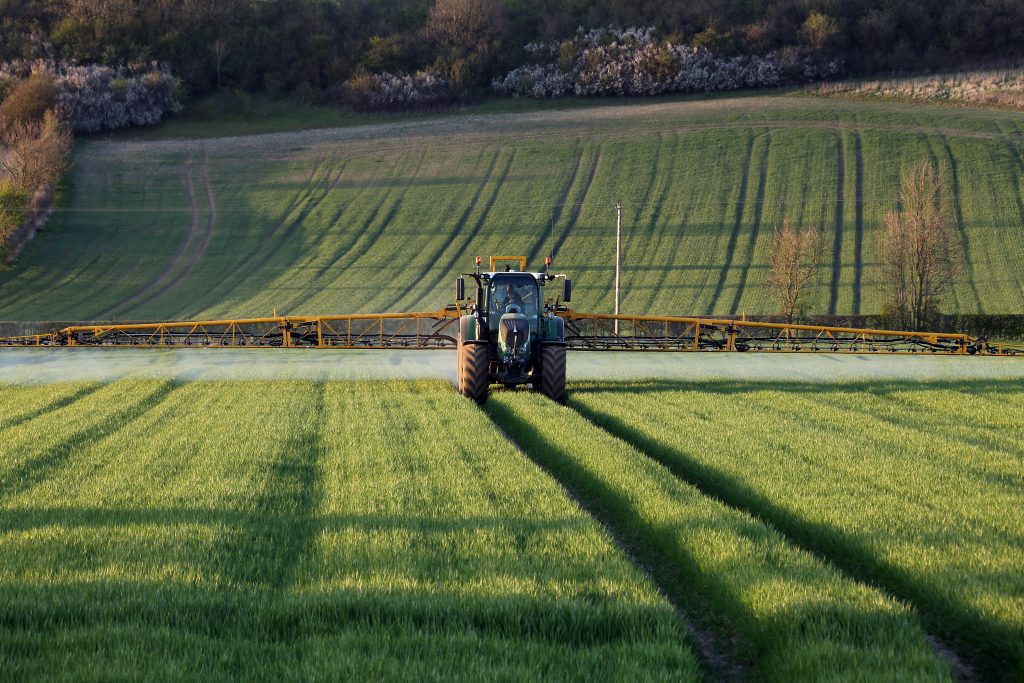
The working assumption on plenty of farms right now is simple: potash crashed back toward pre-crisis prices while nitrogen and phosphate stayed expensive, so potash is the obvious place to trim the fertiliser bill. That logic is sound for some farms. For others, it is a slow-motion mistake that won’t show up on the books until a yield check two or three seasons from now. The difference between the two comes down to one number: the potassium (K) index on your last soil test.
Start with the index, not the invoice
Soil K index systems typically run from very low to very high, with a middle “target” band where crop offtake and applied potash are roughly in balance. If your most recent test sits in that target band or above it, you are farming on top of a reserve. You can reduce bagged potash this year, maybe next year too, and lean on what’s already in the soil without much risk.
If your test is at the low end — or if you haven’t tested in three or four years and you’re guessing — cutting now is a different proposition entirely. You’re not trimming a surplus. You’re accelerating a decline that was probably already underway.
Quick tip: if you only do one thing this autumn, pull a fresh soil sample before you touch the spreader plan. A test costs a fraction of what a wrongly-timed cut costs, and it’s the only way to know which category your farm actually falls into.
Why potash doesn’t behave like nitrogen
This matters because potassium sits in the soil differently than nitrogen does. Nitrogen leaches and volatilises; miss an application and it’s largely gone for that season. Potassium binds to soil particles and accumulates, which is exactly why high-index soils can coast for a year or two without a visible yield hit, and why low-index soils don’t bounce back quickly once they’re run down.
A meta-analysis of 76 fertilisation trials on maize in northern China pulled together 2,663 data points and found available potassium in the soil changed anywhere from a 2.90% fall under nitrogen-plus-phosphorus-only treatment to a 64.40% rise where nitrogen, phosphorus, potassium and organic fertiliser were combined. That’s a huge range for the same broad category of “fertilised soil” — and it shows how much the direction of travel depends on what you’re actually putting back. Skip the potassium component for a few seasons running and you’re pushing your own soil toward that low end of the range, not standing still.
Do the €/ha sum before you decide
Nobody puts a breakeven figure on this, so here’s one to work through with your own numbers. Say muriate of potash is trading around €400 a tonne and contains roughly 60% K2O — that puts the cost at a little over €0.65 per kg of K2O. A typical application of 60 kg K2O/ha then costs somewhere near €40/ha.
Now weigh that against the downside. Potassium underpins nitrogen uptake and enzyme activity in the plant — already well established — so a K-starved crop doesn’t use the (expensive) nitrogen you’ve already paid for as efficiently. If a shortage knocks even a modest slice off grain fill or silage bulk on a crop worth several hundred euro per hectare, that loss dwarfs the €40/ha you saved on potash. The maths only favours cutting when the soil reserve is genuinely there to absorb the gap — which loops straight back to the index reading.
Run your own figures with your own potash quote and your own crop value. The shape of the calculation stays the same: potash is cheap per kilogram right now, but the thing you’re risking isn’t the potash cost, it’s the nitrogen and land cost already sunk into the crop.
Manure and slurry change the calculation
Farms with regular access to slurry, FYM or digestate are in a genuinely different position, because those materials already carry meaningful potassium. A three-year Belgian field trial found the liquid fraction of digestate used as a nitrogen substitute in silage maize is poor in phosphorus but rich in both nitrogen and potassium — meaning farms running that system are already topping up K with every slurry application, whether they think of it that way or not.
Separately, a field trial on mungbean found soil potassium levels rose from 100.27 mg/kg before harvest to 129.45 mg/kg after harvest where phosphate-solubilising bacteria were combined with phosphorus fertiliser — a small, single-trial study on legumes in alkaline-calcareous soil, not a grassland or cereal result, but a useful reminder that potassium status isn’t fixed by the bag fertiliser alone. Organic inputs and soil biology both move the needle. If you’re spreading slurry regularly on index 3–4 ground, cutting bagged potash is genuinely low-risk. If you’re on tillage ground with little or no organic manure and a low index, you don’t have that cushion.
Straw, offtake and the slow drawdown
Every tonne of grain or silage removed takes potassium with it, and straw in particular carries a disproportionate share. Bale and sell straw rather than chop it back in, and you’re exporting potassium off the farm every single harvest. Underapply potash against that offtake for one season and the index barely moves. Do it for three or four seasons running — which is the real risk with a “cut it while it’s cheap” mentality — and you can walk a field down a full index band without ever noticing until yield data says so.
That’s the case for treating potash decisions on a rotation timescale rather than a single-season price call. A review of fertiliser micronutrient use efficiency makes the broader point plainly: fertilising according to soil test, rather than by feel or by price, is what actually lifts yield reliably. Potash is the nutrient where that discipline pays off most, precisely because the damage from getting it wrong is slow and reversible only over several years.
Why the price fell — and whether it comes back
Potash’s price round-trip has a structural explanation nitrogen and phosphate don’t share. Export capacity is concentrated in a small number of countries — chiefly Belarus, Russia and Canada — so geopolitical disruption moves the price hard in both directions. Nitrogen and phosphate stayed elevated longer because they’re tied to gas costs and processing capacity that didn’t unwind as quickly. Potash demand is also more elastic in the short run: because soil reserves buffer a season or two of reduced application, buyers can simply wait out a price spike, which drags the price back down faster once supply normalises. That same elasticity is the reason the current low price isn’t guaranteed to hold — a renewed supply shock from any of those three exporters would feed through to price faster than it would for a nutrient with a more diversified supply base.
None of that changes the index logic above. It just means betting on potash staying cheap indefinitely is a weaker plan than building soil reserves while it is cheap.
The one takeaway
Don’t let the invoice decide this. Let the soil test decide it: index 3 or 4 with manure in the rotation, cut with confidence; index 0 or 1, or no recent test at all, keep spending and use the low price to rebuild the reserve before it gets expensive again.
Sources
- Effects of different fertilization practices on maize yield, soil nutrients, soil moisture, and water use efficiency in northern China (2024)
- Coupling phosphate-solubilizing bacteria with inorganic phosphorus fertilizer improves mungbean phosphorus acquisition, nitrogen fixation, and yield (2022)
- Fertilizer performance of liquid fraction of digestate as synthetic nitrogen substitute in silage maize cultivation (2017)
- Nanotechnologies for increasing the crop use efficiency of fertilizer-micronutrients (2016)

Member Stories
Breeder profiles and member stories from across the Australian Wiltshire Horn community.