Kepak Young Farmer Forum visits livestock show in France
French Limousin farms run far fewer animals per hectare than Irish ones — here's what that gap actually means for profit and genetics.
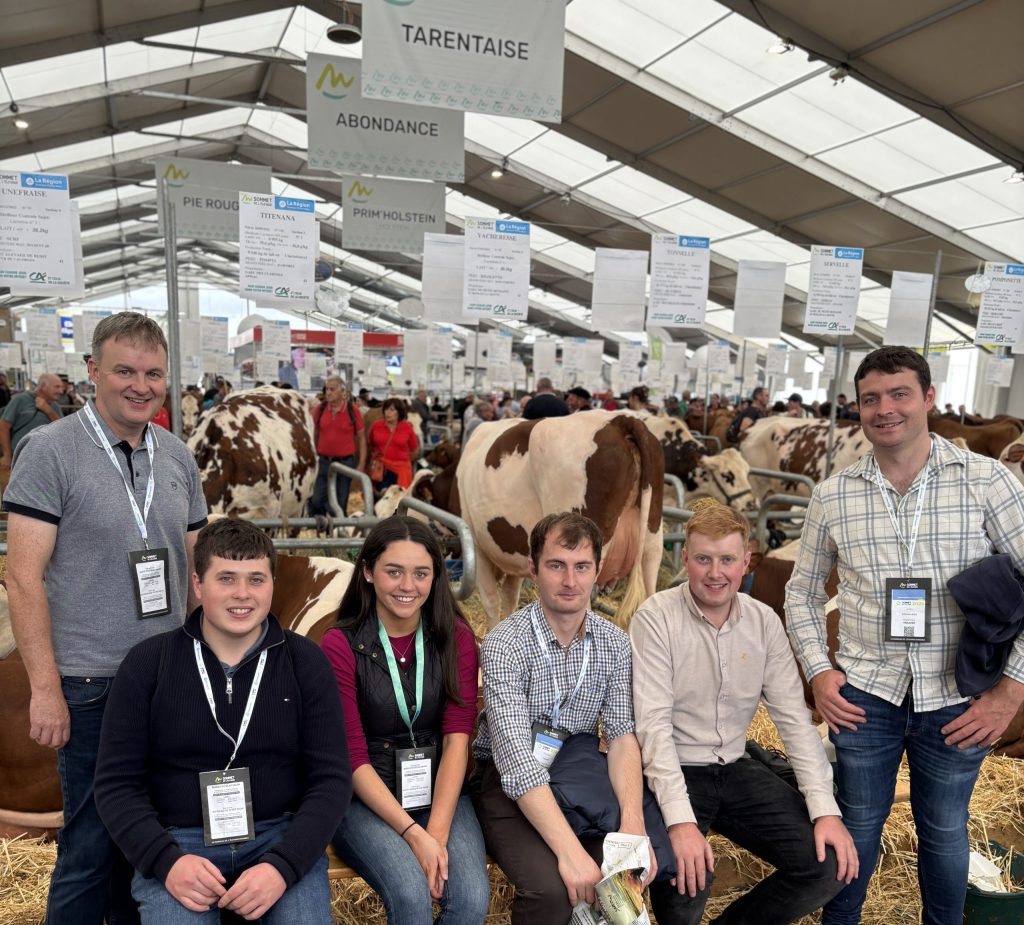
If someone told you that you could stock your ground at 0.7 livestock units per hectare and still make a living, would you believe them — or would you want to know what land, subsidy and genetics had to do to make that number work? That’s the question worth asking after members of the Kepak Young Farmer Forum came home from a French livestock show having heard both figures: a stocking rate of 0.7 LU/ha and a land rental price of around €150/ha. Both numbers were mentioned, neither was explained, and that’s the gap this piece fills.
Myth: A stocking rate of 0.7 LU/ha means French farmers are simply better at grassland management
A stocking rate of 0.7 livestock units per hectare is roughly a third to a half of what many Irish suckler and beef farms carry. The instinct is to read that as a management achievement — more grass grown, more efficiently used, per cow. In reality, it is mostly a function of land economics that don’t exist in Ireland. France has vastly more agricultural land relative to its cattle population than Ireland does, particularly across the Limousin plateau and similar extensive grazing regions, so land is cheaper and more available per animal. A land rental price of roughly €150/ha reflects that abundance — in many parts of Ireland, that figure would barely cover a fraction of the going conacre rate for comparable grazing ground. When land is cheap relative to the animal, farmers have no financial pressure to pack more stock onto it. The low stocking rate isn’t a technique Irish farmers are missing; it’s a symptom of a land market Irish farmers don’t have access to. Copying the stocking rate without the underlying land price is copying the output of a sum without copying the inputs.
Myth: Easy-calving genetics are a free upgrade with no cost elsewhere in the animal
The idea that you can breed for easier calving and keep everything else — growth rate, carcase weight, muscling — exactly as it was is not supported by the genetics. A study of Charolais, Limousin and Blonde d’Aquitaine heifers, using progeny-test records from French AI sires collected between 1985 and 2002, set out specifically to check whether selecting hard for growth in these continental breeds was quietly damaging calving ease, fertility and milk yield in the same animals (genetic correlations between growth, reproduction, calving and suckling traits in Charolais, Limousin and Blonde d’Aquitaine heifers). The researchers were explicit about their motive: “considerable concern about the consequences on fitness-related traits of using narrow breeding objectives for production traits.” In plain terms, growth and calving ease are genetically linked traits, not independent dials you can turn separately. Push hard on weight at 18 months and post-calving weight, and you can expect knock-on effects on calving difficulty score, pelvic opening, sexual precocity, fertility and milk yield in the same cow line. The direction of that trade-off is real; the study does not hand us a single clean percentage to quote for an Irish herd, but the principle — that easy-calving genetics are bought, not given free — is the honest answer the throwaway phrase “easy calving genetics with good post-calving muscling” skips over.
Myth: Limousin genetics are simply “better” for calving than the breeds already used here
Limousin cattle carry a specific genetic variant, the MSTN F94L mutation, that is not present in Angus and that a cross-bred Limousin-Angus study found to be the strongest single genetic association for five separate traits at once: birth weight, calving ease direct, milk, weaning weight and carcase yield grade (genomic prediction accuracy in pure-bred and cross-bred Limousin cattle accounting for the MSTN F94L variant). That is a double-edged finding. It explains why Limousin sires are prized for calving ease alongside decent muscling — one gene variant is doing a lot of the work across several traits simultaneously. But it also means the trait package is bundled: breeders can’t necessarily dial up milk yield or weaning weight in a Limousin line without the same variant also moving birth weight and calving ease in tandem. A separate methodological study built a simulated multi-breed beef population to compare two different statistical approaches — linear-linear and linear-threshold models — for predicting calving ease from birth weight records, and found the two approaches gave broadly similar, equally reliable results, even when some calving records were missing from the data (comparison of statistical models for genetic evaluation of calving ease using birth weight as a correlated trait). The practical takeaway: calving ease predictions in continental breeds, Limousin included, are statistically robust tools, but “easy calving” is not a separate breed virtue — it’s one face of a tightly linked set of traits that also includes birth weight and milk.
Myth: A lower stocking rate must automatically mean either higher or lower profit per hectare
None of the evidence behind this comparison actually measures profit per hectare, and that gap matters more than the headline figures suggest. A stocking rate of 0.7 LU/ha spread over land renting at €150/ha produces a very different cost base per cow than an Irish farm stocking at double or triple that rate on land renting several times higher. Lower stock numbers per hectare can mean lower gross output per hectare too — fewer calves sold off the same ground — unless carcase weight, calf price or direct payments per hectare close that gap. Without farm-level cost and output data, extensive and intensive systems can both be profitable, or both marginal; the stocking rate alone tells you nothing about margin.
Quick tip: before taking any stocking-rate figure from a foreign farm visit back to your own enterprise, ask for the land rental or purchase price alongside it, and work out both numbers as a cost and output per hectare — not per cow — before deciding anything is transferable.
- 0.7 LU/ha only makes sense next to a land rental price of roughly €150/ha — the two numbers are linked, not separate facts
- Growth and calving ease are genetically correlated traits in Charolais, Limousin and Blonde d’Aquitaine heifers, so selecting hard for one can move the other
- The MSTN F94L variant in Limousin cattle is linked to birth weight, calving ease, milk, weaning weight and yield grade all at once — it’s a bundle, not a single trait
- No study here measures profit per hectare directly; stocking rate alone cannot tell you whether a system is more or less profitable
- Statistical models for predicting calving ease from birth weight perform similarly whether or not some records are missing, so the genetic tools are reliable even with imperfect data
Myth: What works in a French showring will work the same way on an Irish drystock farm
A livestock show is a genetics and marketing event, not a farm economics case study. The Limousin breed’s international draw, its calving-ease reputation and its muscling are all real and well documented, but transplanting a French stocking rate or rental price onto an Irish farm ignores the land market, subsidy structure and genetic trade-offs that produced those numbers in the first place. For Irish young farmers, the useful lesson from a trip like this isn’t the stocking rate itself — it’s the reminder to ask what a genetic trait is bundled with before buying into it, and to cost any system change in euro per hectare, not livestock units per hectare, before deciding it’s worth copying.
Sources
- Comparison of models and impact of missing records on genetic evaluation of calving ease in a simulated beef cattle population (2005)
- Increasing the accuracy of genomic prediction in pure-bred Limousin beef cattle by including cross-bred Limousin data and accounting for an F94L variant in MSTN (2019)
- Genetic parameters for growth, reproductive performance, calving ease and suckling performance in beef cattle heifers (2004)