Tasmania’s Low Emissions Livestock project to include Merino sheep
Merino wool flocks graze differently to feedlot cattle, so the methane science behind Tasmania's new trial may not simply transfer across.
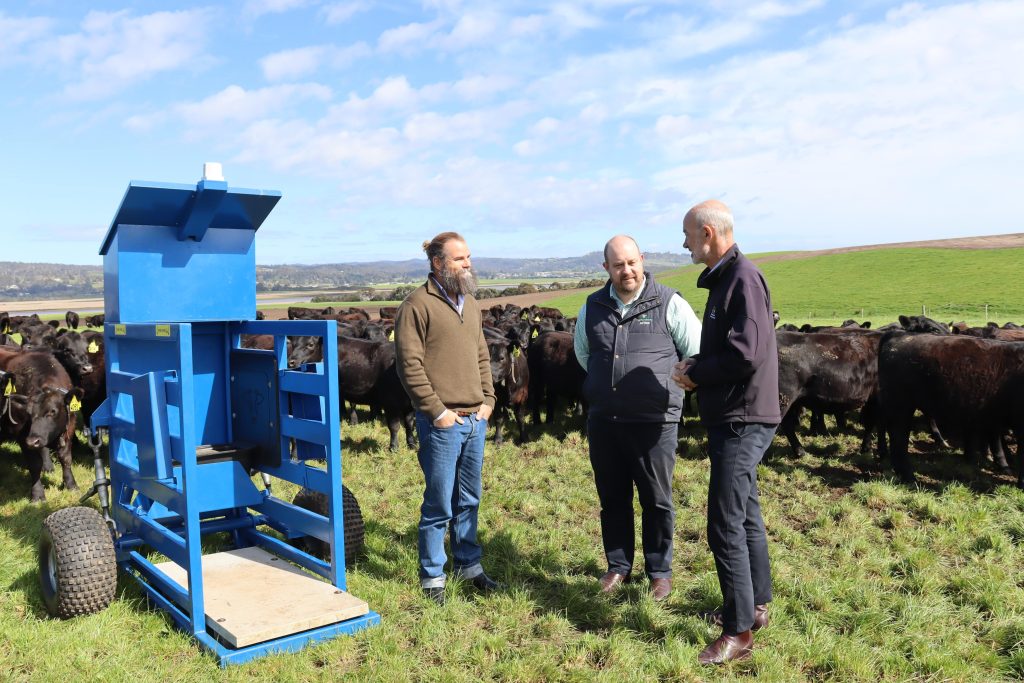
If a feed additive cuts methane in a grain-fed steer standing at a trough twice a day, does it do anything at all for a Merino ewe spread across 400 hectares of button grass with no trough in sight? That question sits underneath Tasmania’s decision to widen its Low Emissions Livestock project beyond cattle, and it is not one the grant paperwork answers.
1. What actually changes when Merinos join the project
Adding Merino sheep to a methane program that has been built around cattle is not a cosmetic expansion. Nearly all of the published feed-additive research behind these programs has been done on beef and dairy cattle in controlled or semi-controlled grazing trials, not on wool sheep. The bromoform dosing trial in Hereford × Friesian heifers, the seaweed-based additive trial in Wagyu × Angus steers, and the grazing heifer methane trial using a GreenFeed monitoring system are all cattle studies. Tasmania including Merinos means researchers are now betting that results from heifers and steers translate to a much smaller, differently built ruminant with a wool coat and a very different feeding rhythm.
2. The dosing problem no one mentions
Every cattle study behind this technology relies on controlled, repeatable dosing. In the bromoform trial, heifers were fed fresh pasture twice daily with feed allowance set precisely at 1.6 to 1.8 times maintenance energy, and treatment doses were fixed at 100, 300 or 500 milligrams of bromoform per heifer per day. The seaweed-based additive trial in grazing heifers used a similarly structured ramp: a two-week baseline, a two-week adaptation period where dose was gradually increased, then seven weeks at a full target dose of 280 milligrams of bromoform per head per day, delivered once daily.
That structure assumes an animal you can handle daily, or at least weekly. A Merino flock run extensively across Tasmanian highland or midlands paddocks is often mustered a handful of times a year, not dosed on a schedule. Pelleted or powdered additives that work because cattle return to a feeder or yard do not have an obvious delivery mechanism for sheep that are never yarded between shearing and marking. None of the evidence available addresses how, or whether, that dosing consistency can be replicated in an extensive wool system, which is precisely the gap the grant announcements skip over.
3. The size of the methane reduction depends entirely on how it is measured
The published cattle results vary enormously depending on method and dose, and that range matters for anyone trying to guess what Tasmania might realistically expect from sheep. The grazing heifer trial recorded methane falling from 203.2 grams per day in untreated animals to 53.7 grams per day in treated animals during the full-dose period, a 73.6 per cent reduction. A broader review of feed additive combinations across ruminant studies found some additives achieving reductions of up to 30 per cent, a much more modest figure than the heifer trial’s headline number, and the review explicitly warns that results vary with diet, adaptation period and how additives interact with each other.
No evidence reviewed here gives a methane reduction figure specific to sheep, let alone Merinos on extensive pasture. Given that the best cattle results come from controlled dosing and continuous monitoring equipment like GreenFeed systems, a Merino flock mustered a few times a year is unlikely to reach anywhere near a 70 per cent reduction, and a target closer to the lower end of that range, or lower again, would be the more defensible planning assumption.
4. Stud breeders and commercial wool growers are not the same test case
A stud Merino breeder running a few hundred closely managed animals for genetics and show condition has daily or near-daily contact with stock, supplementary feeding routines, and the yard infrastructure to administer a dosed additive consistently. A commercial wool grower running several thousand sheep across unfenced or lightly fenced native pasture does not. Any methane trial that wants believable, generalisable results needs both types of operation represented, because a result generated entirely on intensively managed stud sheep would tell Tasmania very little about whether the technology works on the extensive flocks that actually dominate the state’s wool clip. The grant material does not specify which flock type the program is targeting, which leaves open the possibility that the easiest sheep to recruit, the most intensively managed ones, are also the least representative of the industry the project is meant to help.
5. Why the economics do not look like cattle’s economics
Beef and dairy methane mitigation research increasingly gets framed around carbon credit schemes, with the feed additive review noting that economic incentives such as carbon credits could help offset the cost of additives and accelerate adoption. That logic depends on a production cycle where the animal is eventually turned off for meat or milk, so there is a tangible endpoint against which to weigh the additive’s cost.
Wool growers have no equivalent finishing event. A Merino ewe can be shorn for a decade or more before culling, and the return on any feed additive has to be justified purely through fleece value, flock longevity or carbon credit income, not a meat yield payback. That changes the cost-benefit sum considerably: a beef producer can weigh additive cost against a faster, heavier steer at sale, while a wool grower is relying entirely on either a carbon market payment or a fleece-quality benefit that, as yet, has no supporting data.
6. The fleece question nobody has tested
This is the clearest gap of all. None of the available research on bromoform or seaweed-based additives reports any measurement of fleece yield, fibre diameter, staple strength or wool growth rate in treated animals, because none of it was conducted on wool sheep. The in vitro work on seaweed supplementation and rumen fermentation looked at gas production and microbial composition in forage digestion, not animal fibre outcomes. Whether redirecting rumen hydrogen away from methane production changes nutrient availability for wool growth, one way or the other, is simply unanswered in the literature cited by any of these programs. A grower considering joining a Tasmanian trial has no existing data to tell them whether their clip will be unaffected, improved, or quietly compromised.
7. What a credible sheep trial would need to show
Given the gaps above, a Merino-specific trial that actually answers the open questions would need at minimum: a delivery method that works without daily yarding, methane measurement across a full grazing season rather than a short dosed window, separate results for stud and commercial flocks, and fleece quality testing alongside the emissions data. The cattle trials reviewed here ran over periods of roughly seven to twelve weeks in total, including adaptation phases. A sheep trial covering a single shearing cycle, which runs closer to twelve months, would be a meaningfully different and more demanding undertaking.
Tasmania folding Merinos into a cattle-built methane program is a reasonable next step for broadening the research, but it is starting from a near-empty evidence base for sheep specifically. Until a trial produces sheep-specific dosing, reduction and fleece data, any number attached to Merino methane reduction is an extrapolation from cattle, not a measured result.
Sources
- Dose-dependent inhibitory effects of an investigational feed additive containing bromoform on methane emissions from cattle fed fresh pasture (2025)
- Mitigating methane emissions in grazing beef cattle with a seaweed-based feed additive (2024)
- Evaluation of Seaweed-Based Feed Additive on Enteric Methane Emissions of Grazing Heifers (2025)
- Advancing methane mitigation in ruminants through feed additive combinations (2026)
- Potential of seaweed (Eucheuma cottonii) supplementation to reduce methane production in vitro (2025)

Member Stories
Breeder profiles and member stories from across the Australian Wiltshire Horn community.