Rural listings feature quality grazing, cropping and carbon options
A buyer's framework for testing whether a property's "carbon option" adds value or quietly caps its grazing and cropping future.
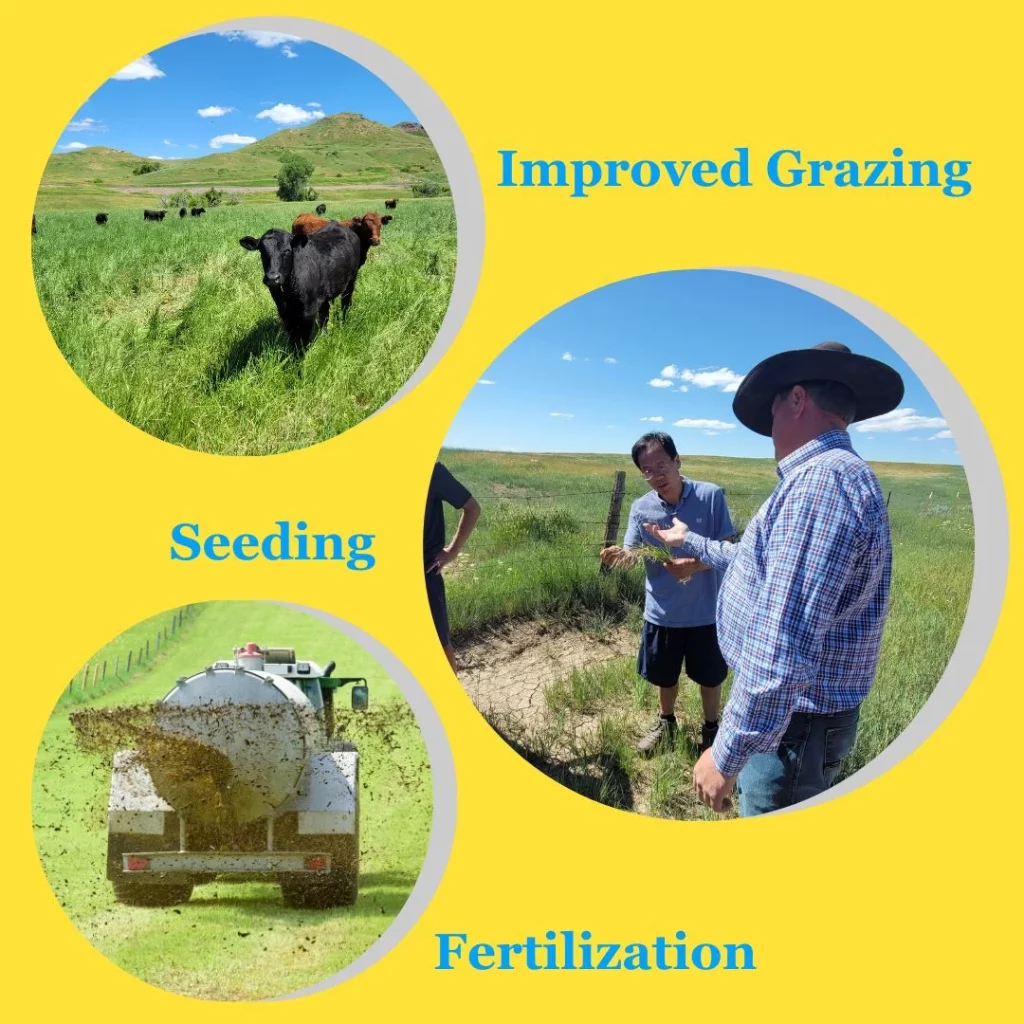
The agent unfolds the listing on the bonnet of the ute, and there it is in bold type: “quality grazing, cropping and carbon options.” The buyer has already walked the creek flat, kicked at the clay loam near the yards, and pictured a mob of steers there by autumn. But the word “carbon” sits on the page like a locked gate with no key visible. Is it a bonus income stream sitting on top of the grazing enterprise, or is it a fence around how many cattle this paddock will ever be allowed to carry?
That question is the whole game. A carbon claim on a rural listing is not a free extra. It can be a binding land-use instrument, sometimes running for decades, and if the buyer doesn’t interrogate it before signing a contract of sale, they can inherit restrictions they never priced in.
Step 1: Separate “carbon option” from “carbon contract”
The first job is linguistic, not financial. “Carbon option” in a listing can mean anything from an unregistered, back-of-envelope estimate of what the soil or trees might sequester, through to a fully executed, transferable agreement already generating credits. Only the second thing has legal weight that follows the title.
Ask the agent or vendor directly: is there a registered project, under what scheme, and does the agreement transfer to a new landholder automatically or does it need separate assignment? If the answer is vague — “there’s real potential here” — treat the carbon line as marketing copy, not an asset, until proven otherwise.
Tip: Request the project registration number and the name of the scheme administrator in writing before making an offer, not after.
Step 2: Get the contract term and the stocking/rotation conditions in writing
Carbon projects are typically long commitments precisely because soil and biomass carbon take years to accumulate and can be lost quickly if management reverts. A useful illustration of how long these commitments run comes from outside the grazing world: a study of carbon offset assessment in large-scale rubber plantations in southern Thailand modelled its voluntary market contract over a 30-year horizon, tracking above-ground biomass across plantation age classes of 1–6, 7–13, 14–20 and 21-plus years. That is a tree-crop carbon project, not a grazing one, but it shows the pattern buyers need to expect from any serious carbon scheme: multi-decade duration and management conditions tied to the age and condition of the vegetation or soil being measured.
On a grazing or cropping property, the equivalent conditions usually show up as caps on stocking rate, minimum ground-cover thresholds, restrictions on cultivation or pasture renovation, and rules about which paddocks can be spelled and when. Get the actual clause numbers, not a summary, and get a straight answer on how many years remain on the term.
Tip: Ask for the permanence period separately from the contract term — some schemes require the carbon benefit to be maintained for years after active trading stops, which outlasts the sale contract itself.
Step 3: Price the exit, not just the entry
Before buying, ask what happens if you want out of the carbon agreement early — whether that’s because the cattle price cycle favours a stocking rate above the cap, or because you want to crop a paddock currently locked into ground-cover rules. Early exit from a carbon scheme commonly triggers repayment of credits already issued or sold, sometimes with a buffer or penalty built in, because the scheme’s integrity relies on the sequestered carbon staying in the ground or the biomass staying standing.
This is the point where resale flexibility and land value intersect. A property bound to a carbon contract for another 20 years is a different asset than one with no encumbrance, even if the paddocks look identical from the fence line. Lenders and future buyers will ask the same questions you’re asking now, so an unresolved carbon liability can sit on the title and depress what the next buyer is willing to pay.
Tip: Ask your solicitor to search the title for any caveat, covenant or registered carbon service agreement — don’t rely on the vendor’s verbal description of the scheme’s terms.
Step 4: Test whether the carbon income is additive or a trade-off
The core financial question is simple to ask and hard to get a straight answer to: does generating the carbon credit require you to run fewer stock or crop less intensively than you otherwise would? If a scheme pays for soil carbon gains achieved partly through reduced grazing pressure or longer pasture spells, then the carbon cheque is, in effect, partly compensation for grazing income you’re giving up — not pure upside stacked on top of an unchanged enterprise.
Request the baseline stocking rate or cropping intensity the scheme was approved against, and compare it to what the land could realistically run without the agreement. The gap between those two numbers is the real cost of the carbon option, and it should be subtracted from any carbon revenue before you compare the property’s total return to a comparable block with no carbon encumbrance.
Tip: Build two gross margin budgets — one with the carbon contract’s restrictions applied, one without — and judge the purchase price against both.
Step 5: Match the claim to the country
Not every paddock is a plausible carbon paddock. Soil type, rainfall reliability, and the dominant grass species all affect whether additional carbon sequestration is realistic or marginal. The rubber plantation research is a reminder of the broader principle even though it’s a different land use: that study only produced a credible offset estimate because it combined soil series databases, biomass equations and spatial classification across five actual growing regions — it didn’t assume every hectare performs the same. A grazing property’s carbon claim deserves the same scrutiny: ask what soil testing or baseline measurement, if any, underpins the number quoted, and whether it was done on this specific property or extrapolated from a regional average.
Tip: If the vendor can’t produce a site-specific baseline measurement, discount the carbon claim heavily in your valuation — potential is not the same as a quantified, verified offset.
Common mistakes buyers make
- Treating “carbon option” as pure bonus value without checking whether it requires reduced stocking or cropping intensity.
- Not asking how many years remain on the contract, or confusing the trading term with the longer permanence obligation.
- Skipping a title search for registered carbon agreements and relying only on the agent’s summary.
- Assuming a carbon claim is transferable automatically on settlement without checking the scheme’s assignment rules.
- Valuing the property as if the carbon-restricted paddocks can be run at full stocking capacity from day one.
Sources

Flock & Breeding Desk
Writing on breeding, lambing, nutrition and day-to-day flock management for Wiltshire Horn producers.