Could this be the future of milk collection in Ireland?
Irish milk collection costs €95m a year — here's whether bio-CNG trucks could realistically cut that bill, and who could try it first.
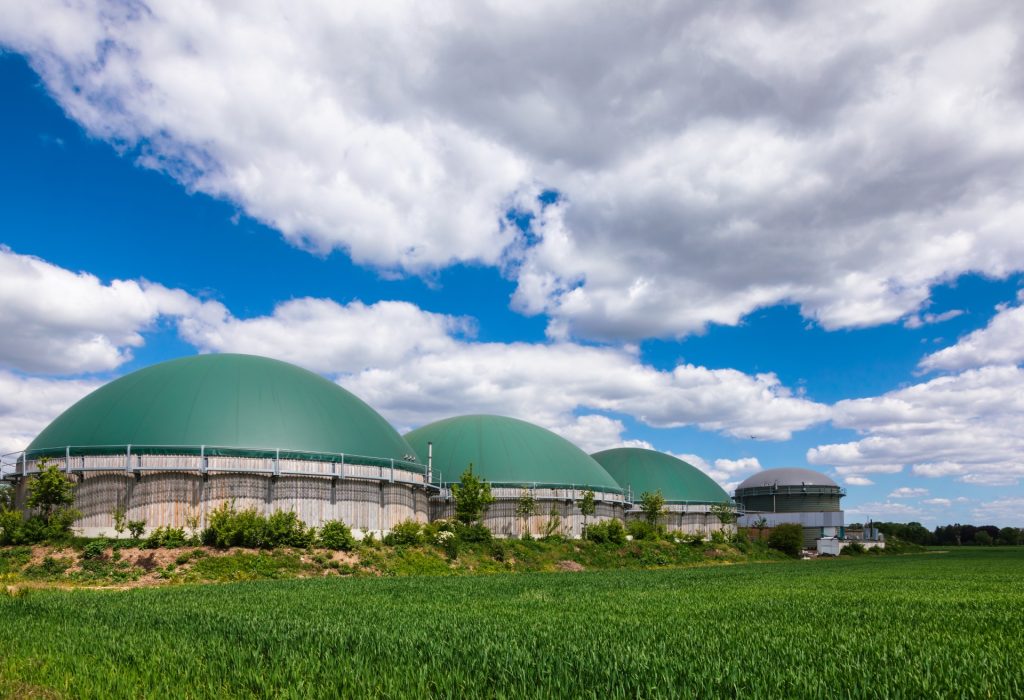
Most people who think about milk collection at all assume it’s a solved problem: a tanker arrives, the bulk tank empties, the tanker leaves. The truck itself barely registers. But stand at the end of a farm lane at half five in the morning and watch that articulated unit grind up through the gears, and you’re looking at one of the most expensive, least examined parts of the whole dairy chain — a system that costs Irish co-ops and their suppliers somewhere in the region of €95 million a year, working out to roughly 1.1 cent on every litre of milk produced. That’s the assumption worth complicating: that the only thing left to improve in dairy is the cow, the grass, or the parlour. The lorry matters too.
What the diesel actually costs, and what gas could save
That 1.1 cent per litre figure is easy to wave past, but multiplied across the national herd’s output it becomes one of the largest shared costs in Irish dairying — bigger, in aggregate, than many of the efficiency gains co-ops spend years chasing on-farm. Fuel, driver time, vehicle depreciation and route planning all sit inside that number, and diesel is the single input most exposed to global price shocks. A fleet running on biomethane, compressed into bio-CNG, doesn’t eliminate collection costs, but it changes the shape of them: fuel becomes something a co-op can, in principle, produce or contract locally rather than import. Whether that produces a genuine cut to the 1.1 cent figure depends entirely on three things — the price of biomethane delivered at the pump relative to diesel, the capital cost of new gas trucks and compressors, and how much of the existing diesel fleet can realistically be replaced before it’s due for renewal anyway. None of those numbers are settled in Ireland yet, which is the honest answer underneath the exciting one.
Where the trucks would actually fill up
The more useful question than “could this work in theory” is “could this work on the roads these tankers already drive.” Ireland has a small number of anaerobic digestion plants in operation, plus the grid injection facility at Mitchelstown, and the geography of milk collection is not random — tankers cluster densely around processing sites in Munster and the south-east, with Dairygold, Kerry, Tirlán and Lakeland each running collection patterns shaped by decades of co-op mergers and catchment boundaries. For bio-CNG to be practical rather than aspirational, a meaningful share of daily collection routes would need to pass close enough to an existing production or injection point to refuel without adding significant empty-running mileage. Some routes around the Mitchelstown area plausibly do. Large parts of the west, north-west and midlands, where collection distances are already longer and herds more scattered, almost certainly don’t — not without new infrastructure that doesn’t exist today.
Centralised gas versus the Dutch farm-digester model
The version of this idea that’s been piloted on the continent leans heavily on a structural feature Ireland doesn’t share at scale: clusters of farms with their own on-farm digesters, producing biomethane close enough to the collection route that refuelling and milk production are almost the same geography. Ireland’s biomethane sector is still built the opposite way around — a handful of larger, centralised plants rather than a dense scatter of farm-based digesters feeding local co-op fleets. Irish dairy farms are also, on average, smaller and more numerous than their Dutch or German counterparts, which means the manure volumes and capital appetite needed to justify an on-farm digester simply aren’t there for most suppliers. That’s not a reason to dismiss the idea, but it does mean Ireland would be adapting a centralised-production, long-haul-refuelling model rather than copying a farm-to-farm one.
The grant gap nobody’s pricing publicly
Ireland does have support mechanisms moving in this direction. The GRAZE grant scheme exists to help convert vehicles to gas, but its funding — around €750,000 — was designed to help bring roughly 75 vehicles onto gas nationally, across all sectors, not just milk collection. A single co-op’s tanker fleet can run into the dozens of vehicles on its own, so that scheme alone would not convert even one large co-op’s collection fleet, let alone several. The separate €200 million Biomethane Capital Grant Scheme, still working through its expression-of-interest process, is aimed at production capacity rather than vehicles or refuelling stations, meaning the money to grow the gas supply and the money to convert the trucks that would burn it currently sit in two different buckets that haven’t yet been joined up for dairy logistics specifically.
What it would actually take to start
A co-op serious about this wouldn’t need to convert its whole fleet on day one. The realistic first step looks more like a pilot: a short list of routes already passing near an operating AD plant or the Mitchelstown injection point, a small number of gas-capable tankers, and a refuelling arrangement — public or on-site — that doesn’t force drivers into long detours. That requires capital for the vehicles themselves, a commercial agreement for guaranteed biomethane supply, and enough lead time to test whether collection schedules, which are built around milking times rather than fuel logistics, can absorb a new refuelling step without disrupting farmers’ collection windows. None of that is exotic engineering. It’s procurement, contracts and route planning — which is exactly why it’s achievable sooner than a full-fleet conversion, but still years rather than months away for any co-op that hasn’t already started.
The quick recap
- Irish milk collection costs roughly €95 million a year nationally, about 1.1 cent per litre — the baseline any fuel switch has to actually improve on.
- Only routes near one of Ireland’s seven AD plants or the Mitchelstown grid injection point are refuelling-practical today; much of the west and midlands isn’t.
- Ireland’s biomethane production is centralised, not farm-based like the Dutch pilot model, because most Irish dairy farms are too small and dispersed to run their own digesters.
- The €750,000 GRAZE grant was designed for about 75 vehicles nationally — far short of what a single co-op fleet would need to convert.
- A realistic starting point is a small regional pilot near existing gas infrastructure, not a national fleet switch.
Back at the end of the lane
So the tanker pulling up the lane at half five tomorrow morning will almost certainly still be running on diesel, and probably will be for a few years yet. But the question of whether it has to stay that way is no longer entirely rhetorical. For a handful of routes near Mitchelstown or one of the other digester sites, with the right grant stacking and a co-op willing to run a modest pilot rather than wait for a national solution, that truck could plausibly be burning gas made from Irish slurry within a few years. For most of the country, though, the honest answer is that this is a Munster-shaped opportunity first, a national one only much later — and the lorry at the end of your lane is a long way from being the bottleneck it is somewhere else.

Member Stories
Breeder profiles and member stories from across the Australian Wiltshire Horn community.