AWI wool levy revenue gains boost company reserves first
An $8.9m reserve rise sounds like good news, but what it means for your levy rate depends on where the money actually came from.
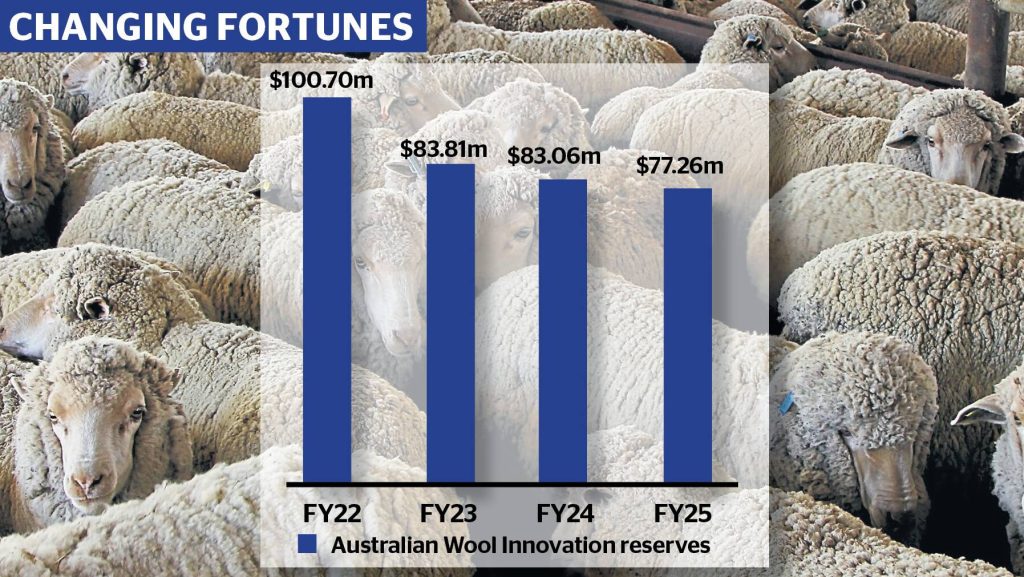
You open the wool sale statement, see the levy line deducted before the cheque even reaches your account, and think little more of it until a headline flashes past about Australian Wool Innovation’s reserves climbing by $8.9 million. No context, no explanation of whether that is good news for the rate you pay, bad news, or simply irrelevant to the number printed on your docket. For most woolgrowers, that is where the story usually ends.
The $8.9 million reserve gain is real, but on its own it tells you almost nothing about whether your levy rate will rise, fall or stay put at the next review.
Myth: A bigger reserve means wool prices have surged
The instinctive read on any revenue or reserve increase is that the market must be running hot. That is only one possible driver, and not necessarily the dominant one. Levy revenue collected by AWI moves with three separate variables: the price per kilogram of wool sold, the total volume of wool shorn and sent to market, and the statutory levy rate itself, which is set as a percentage of sale value. A reserve increase can happen even in a flat or soft price environment if shorn volume holds up, or if the levy rate applied during the collection period was higher than the year before due to a prior grower vote. Without AWI publishing the breakdown of how much of the increase came from each of those three sources, it is not safe to assume price strength is doing the heavy lifting. It is just as plausible that steadier throughput, timing of levy remittances, or lower-than-budgeted program spending left more money sitting in reserve at year’s end, which is a reserve story rather than a market story.
Myth: Growing reserves prove AWI is overfunded
Statutory research and marketing bodies like AWI typically operate against an internal reserve policy, a target buffer intended to smooth out the volatility in wool levy income from one season to the next and to guarantee committed research, extension and marketing programs can keep running through a downturn without being cut mid-contract. A single year’s reserve gain needs to be read against that target, not in isolation. If reserves were sitting below the board’s own comfort range after a run of lean years, an $8.9 million lift could simply be rebuilding a buffer that was already judged too thin, with most of it earmarked against multi-year commitments already on the books rather than available for new spending. If reserves were already comfortably within target, the same dollar figure looks very different, and raises a fairer question about whether collection is outpacing need.
Myth: Higher reserves automatically mean the levy poll will cut the rate
The wool levy rate is not set by AWI management. It is set by growers themselves, through a poll process that reviews the rate periodically and allows growers to vote on whether it should rise, fall or stay the same, within a range set by government regulation. A healthy reserve position can be used to argue either way at that poll. Growers who want relief on the percentage deducted from every wool cheque can point to strong reserves as evidence the current rate is generating more than is being spent. AWI and growers who favour maintaining funding levels can equally argue that reserves need to stay where they are to protect multi-year research and market development commitments already committed, particularly offshore marketing contracts that run for several years and cannot easily be unwound. The reserve figure is an input to that debate, not a verdict on it.
Myth: Rising reserves mean the industry itself is growing
This is the gap most coverage skips entirely, and it matters most to individual growers. The national sheep flock and wool clip have been on a long-run downward trend as more mixed farming operations shift toward cropping or prime lamb production rather than wool-focused merino enterprises. If shorn volume is falling while levy revenue and reserves rise, the mathematics only work if price per kilogram is rising enough to offset the smaller clip, or if the levy rate itself increased. Either way, the practical implication for an individual grower is that the levy burden per remaining wool producer is not shrinking in line with the shrinking industry; it may be doing the opposite. Fewer growers are effectively carrying the cost base that funds AWI’s research, extension and promotional programs, even as total reserves look healthier on paper.
Myth: Every woolgrower benefits equally from a bigger reserve
How AWI allocates additional reserve capacity does not land evenly across the grower base. Spending decisions on fibre-specific research, marketing campaigns aimed at fine apparel wool versus broader-micron wool used in carpets and interiors, and biosecurity or welfare programs all favour some production systems more than others.
| Grower type | Typical exposure | What extra reserve spending usually favours |
|---|---|---|
| Fine wool, superfine merino | Highest value per kilogram, most exposed to apparel market swings | Global fashion and retail marketing, luxury textile promotion |
| Broad wool, crossbred | Lower value per kilogram, more exposed to interiors and carpet demand | Often a smaller share of promotional spend, more reliant on R&D and on-farm productivity programs |
| Large-scale producers | Levy paid scales directly with volume sold | Benefit from extension and productivity research proportional to throughput |
| Small or part-time producers | Fixed compliance and registration burden regardless of scale | Relatively less return on levy paid once fixed overheads are considered |
None of this means the allocation is unfair by design. It means that a single aggregate reserve figure flatters the picture of “the industry” while obscuring that the people actually paying the levy are not a uniform group, and the next spending round or poll outcome will not affect a superfine merino breeder in the same way it affects a crossbred lamb and wool producer running a smaller flock.
What growers should actually watch for
The number worth tracking is not the $8.9 million headline but the breakdown behind it: how much came from price, how much from volume, and how much from the levy rate itself, set against AWI’s stated reserve target and its locked-in spending commitments for the next one to three years. That detail, when AWI eventually publishes it in full annual reporting, will tell growers far more about what to expect at the next levy poll than the reserve figure alone ever could.