Watch: What to expect at the FBD National Dairy Show 2026
Parking, pricing and timing decide whether your Millstreet trip is smooth or stressful — here's what the class schedule won't tell you.
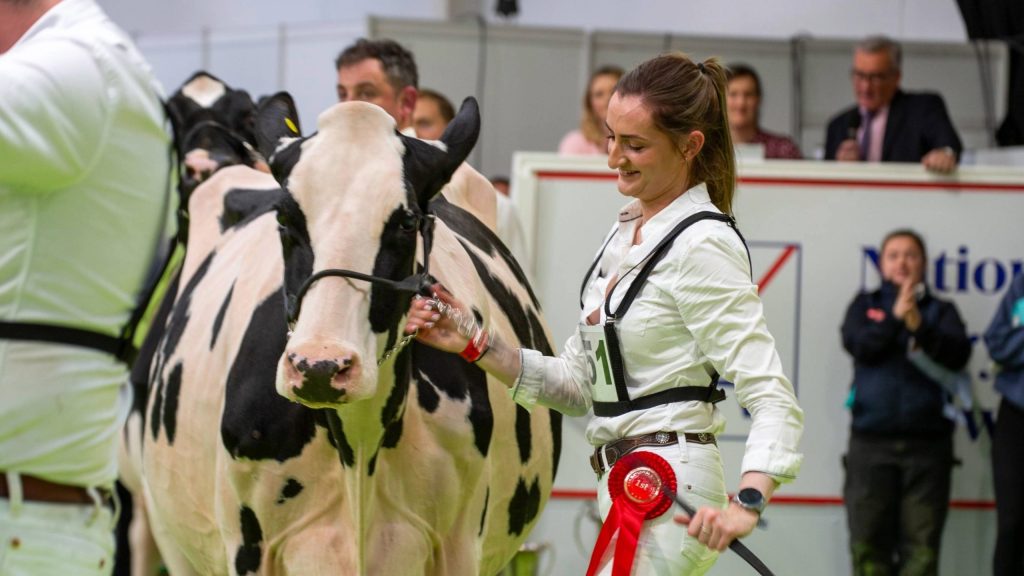
Here is the surprising part: one of the biggest pedigree dairy cattle shows on the Irish calendar, drawing exhibitors and spectators from every corner of the country to a single arena in a small Cork town, publishes a full class schedule and a judging panel — Mark Logan, Jane Steel and Izzy Jones among them — but says almost nothing about what it actually costs to walk through the gate or where you’re supposed to leave your car once you get there. For an event held at Green Glens Arena in Millstreet on October 9–10, where the roads into town are narrow and the car parks are finite, that silence matters more than another breed-by-breed rundown of the ring order.
The single most useful thing you can do before travelling to Millstreet is decide, in advance, which day matters more to you — because trying to do both properly without a plan is how people end up missing the thing they came for.
The show itself runs across two days: Friday opens with the YMA Showmanship League and Champion Handler classes, while Saturday builds steadily toward the Holstein Championships and the Supreme Championship, with a trade exhibition, the Rispoval Calf Village, and Friday evening’s Innovation Awards running alongside the cattle classes. That much is already public. What isn’t spelled out anywhere is how those two days actually feel on the ground, and which one suits a first-time visitor who can only spare one.
Friday: the quieter, more personal day
Friday is built around people as much as cattle. The YMA Showmanship League and Champion Handler classes put young handlers front and centre, and the atmosphere tends to be warmer and less congested than Saturday’s main event. If you’re bringing children who are curious about showing rather than committed to seeing champion cows crowned, or if you want to walk the trade stands and the calf village without shoulder-to-shoulder crowds, Friday rewards you. The Innovation Awards in the evening add a trade-focused close to the day, useful if you have any interest in the commercial side of dairying rather than purely the show ring.
Saturday: the day everything peaks
Saturday is the day most people picture when they think of this show. The breed classes run through the morning and early afternoon, narrowing toward the Holstein Championships, and the Supreme Championship — where the best animals from each breed’s final line-up are brought back into the ring and judged against one another for the overall title — happens late in the day, typically as the last major event before the show winds down. It is the moment with the biggest crowd, the tightest parking, and the longest wait if you arrive without a plan. It is also, unambiguously, the moment worth being there for if you can only choose one.
| Aspect | Friday | Saturday |
|---|---|---|
| Main draw | Showmanship, Champion Handler classes, trade awards | Breed championships building to Holstein and Supreme Championship |
| Crowd and parking pressure | Noticeably lighter | Heaviest of the two days, especially mid-to-late afternoon |
| Best suited to | Families, first-timers, anyone wanting a relaxed browse of trade stands | Anyone who wants to see the title decided and the biggest names in the ring |
| Time needed to see the key moment | A few hours covers the showmanship highlights | Realistically a full day, arriving early and staying late |
| Risk if you arrive late | Low — classes are spread through the day | High — you can miss the breed final judging entirely if parking delays you |
What “Supreme Championship” actually means
It’s worth being precise about this because the phrase gets used loosely. The Supreme Championship isn’t a separate competition with its own entries — it’s the final sorting of the show’s best animals, pulling the champions and reserve champions from each breed section back into the ring together so a judge can place them against each other for the overall title of the show. Because it depends entirely on the breed classes finishing first, it sits at the end of Saturday’s programme, after the Holstein Championships have been decided, and it will not run to a fixed clock time. Breed judging can overrun, especially in a year with strong entries, so treat any printed time for the Supreme Championship as an estimate rather than a guarantee.
Which breed rounds reward arriving early
If your real interest is a specific breed rather than the overall spectacle, the general rule at multi-breed shows holds here too: the early classes in each breed’s running order — the younger animal classes — draw smaller crowds and give you a much closer view of the ring than the championship class for that breed, which fills in fast once word spreads that the serious contenders are being lined up. Arriving in good time for a breed’s first class, rather than trying to push to the rail just before its championship, is the more realistic way to actually see the animals rather than the backs of other spectators’ heads.
Reading the judges without over-reading them
Named judges like Mark Logan bring their own eye to type, udder conformation, mobility and breed character, and different judges will weight these differently on the day — that’s normal in pedigree showing and not something a published biography will spell out in advance. Rather than trying to predict outcomes from a judge’s background, it’s more useful for a visitor to simply watch for the same things the judge is watching: how an animal walks, how she stands when set up, and how consistent the top line-up looks compared with animals further back in the class. That’s the skill of the show, and it’s learnable ringside regardless of who’s holding the clipboard.
Parking, traffic and the Millstreet bottleneck
Millstreet is a small town asked to absorb a large show, and that mismatch is the single biggest practical risk to your day. The roads feeding into Green Glens Arena are not built for show-day volume, and on Saturday afternoon, as the championship classes approach, traffic backs up well before the venue itself. No official parking cost or capacity figures are published in the show’s own materials, so the safest approach is to assume parking will be tight, arrive with a buffer of at least an hour before anything you specifically want to see, and have a backup plan if the nearest car parks fill.
Quick tip: if you’re only attending Saturday, build your day around the Supreme Championship rather than a specific clock time — get into the venue early, enjoy the breed classes as they come, and treat the exact timing of the final judging as something that reveals itself rather than something you can set a watch to.
Tickets, weather, and dressing for both arenas
No admission price is listed in the show’s public schedule, which means first-time visitors should check directly with the venue or gate on the day rather than assuming a figure. On logistics closer to comfort than cost: Green Glens Arena combines covered indoor space with outdoor elements around the grounds, including the trade stands and calf village, so October weather in Cork — which can swing from mild to wet within a single afternoon — will affect your day more outside the main arena than inside it. Footwear that copes with mud, and a layer you can shed indoors, matters more here than it would at a purely indoor event.
Verdict
If you can give the show two days, do it — Friday’s calmer pace is the better introduction, and Saturday is where the show actually peaks. If you can only manage one, Saturday wins on substance but demands more from you logistically: arrive early, expect traffic, and don’t chase a printed time for the Supreme Championship. Friday is the safer, gentler choice if parking stress or crowd size is your main worry, but it will not give you the moment the show is actually built around.

Flock & Breeding Desk
Writing on breeding, lambing, nutrition and day-to-day flock management for Wiltshire Horn producers.